Don't miss our holiday offer - up to 50% OFF!

The Ultimate Guide to Football Helmet Sizing: Protection Starts with a Tape Measure
In the world of contact sports, your equipment is your first line of defense, but even the most expensive gear is useless if it doesn’t fit. Proper football helmet sizing is the most critical step in player safety. A helmet that is too loose can shift during impact, leading to poor energy absorption, while a helmet that is too tight can cause discomfort and headaches that distract from the game. Whether you are a parent buying for a youth player or an equipment manager for a high school team, understanding the nuances of football helmet sizing is a non-negotiable skill.
The Science of a Secure Fit
The goal of accurate football helmet sizing is to ensure that the internal padding makes consistent contact with the skull without creating “hot spots” or pressure points. When a helmet fits correctly, it acts as an extension of the body. To achieve this, we must look beyond just the brand name and focus on the specific dimensions of the athlete’s head.
Step 1: Measuring Head Circumference for Football Helmet Sizing
Before you look at a size chart, you need a physical measurement. To begin the process of football helmet sizing, follow these steps
- Use a flexible cloth measuring tape.
- Wrap the tape around the player’s head, approximately 1 inch above the eyebrows.
- Ensure the tape is level and snug, but not digging into the skin.
- Record the measurement in both inches and centimeters, as different manufacturers use different units for their football helmet sizing charts.
If you are comparing different brands and how their shell sizes vary, you can browse this collection of to see the specific measurement ranges provided by top manufacturers.
Step 2: Choosing the Right Shell Based on Footbal Helmet Sizing Charts
Once you have your measurement, you will notice that footbal helmet sizing usually falls into categories: Small, Medium, Large, and Extra Large. However, an “XL” in one brand might be a “Large” in another. This is why you must always consult the specific brand’s chart.
- Youth Sizes: These often feature lighter shells made of ABS plastic, designed for lower-velocity impacts.
- Adult/Varsity Sizes: These use polycarbonate shells and offer a wider range of footballhelmet sizing adjustments to accommodate fully developed athletes.
Step 3: The “On-Head” Test
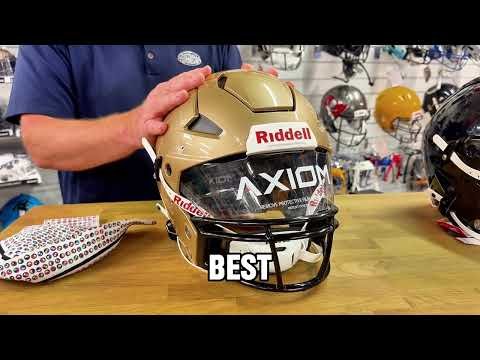
After you have selected a helmet based on your initial footbal helmet sizing data, it is time for the physical fit test. Put the helmet on and check the following:
- The Frontal Rim: The front of the helmet should sit approximately 1 inch (two finger widths) above the eyebrows. If it sits lower, the helmet is too big; if higher, it is too small.
- The Jaw Pads: These should be flush against the player’s cheeks. Many players make the mistake of thinking footbal helmet sizing is only about the crown of the head, but the jaw pads are vital for preventing side-to-side movement.
- The Crown: There should be no gap between the top of the head and the internal padding.
For a full selection of jaw pads, chin straps, and helmets that fit these criteria, check out our to find the gear that matches your measurements.
Step 4: Adjusting Air Bladders and Padding
Many modern helmets utilize air-liner systems to fine-tune football helmet sizing. If the helmet feels slightly loose even after following the size chart, you can use a specialized pump to inflate the bladders. This creates a custom mold around the unique contours of the player’s head. However, air is a supplement to—not a replacement for—correct initial football helmet sizing.
Step 5: The Pressure Test and Movement Check
To finalize your footballhelmet sizing check, have the player perform the “rotation test.” Ask the player to shake their head “no” and “yes” while you hold the helmet. The skin on the forehead and cheeks should move with the helmet. If the helmet slides over the skin, you need to go down a size or adjust the padding.
Common Mistakes in Football Helmet Sizing
One of the biggest errors is “growing into” a helmet. Parents often want to buy a larger size to save money, but in football, this is a major safety risk. Footbalh elmet sizing must be accurate for the current season. Another mistake is ignoring the hairstyle; if a player has long hair or braids, the measurement should be taken with the hair styled as it will be during the game to ensure the football helmet sizing remains consistent.
Maintenance and Re-Sizing
Throughout the season, sweat and impact can compress the internal foam. This means you should perform a footballhelmet sizing check every few weeks. If the helmet begins to feel loose, it may be time to replace the internal liners or re-inflate the air bladders.
Conclusion: Prioritizing Precision
Mastering football helmet sizing is the best way to keep athletes safe and confident on the field. By starting with a precise measurement, consulting manufacturer charts, and performing the “on-head” movement tests, you ensure that the technology inside the helmet can do its job correctly. Never compromise on fit—protection starts with the right size.